
Why Is There a Gap Under My Garage Door and How Can It Be Fixed

Why Is There a Gap Under My Garage Door and How Can It Be Fixed

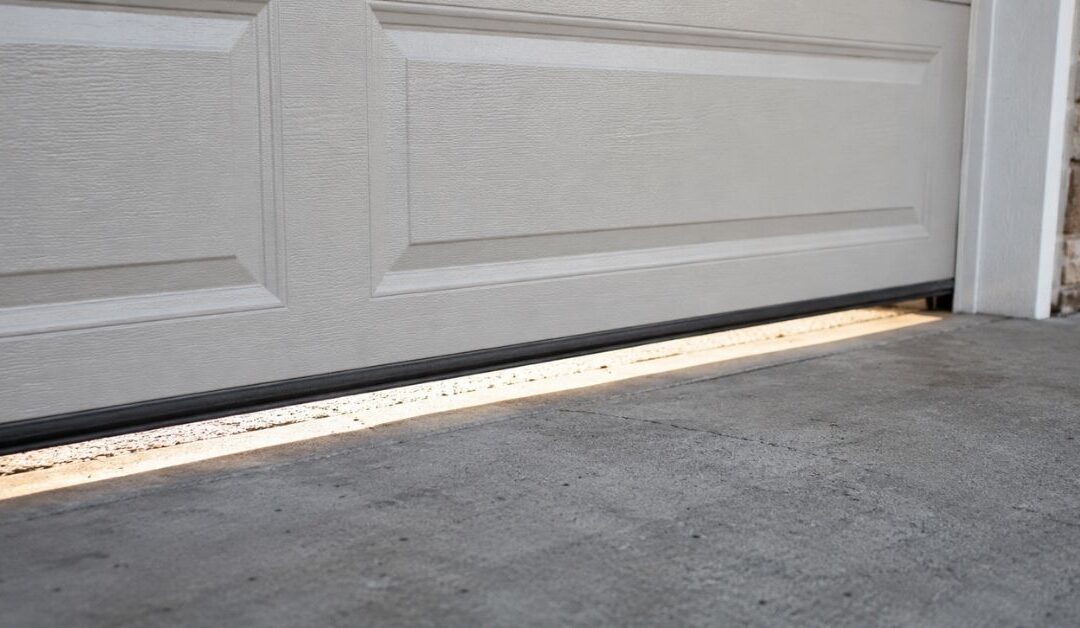
Today we talk about a common issue of Why Is There a Gap Under My Garage Door and How Can It Be Fixed? A gap under your garage door can allow water, dirt, pests, and outside air into your garage. While a small opening may seem harmless, it can indicate worn weather stripping, an uneven floor, or a door alignment problem. At Alliance Overhead Door, We recommend identifying the cause before deciding on the right solution.

What Causes a Gap Under a Garage Door?

A worn bottom seal is one of the most common causes. This flexible strip runs along the bottom of your door and creates a barrier against the garage floor. Over time, weather exposure and daily operation can cause it to crack, flatten, or pull away.

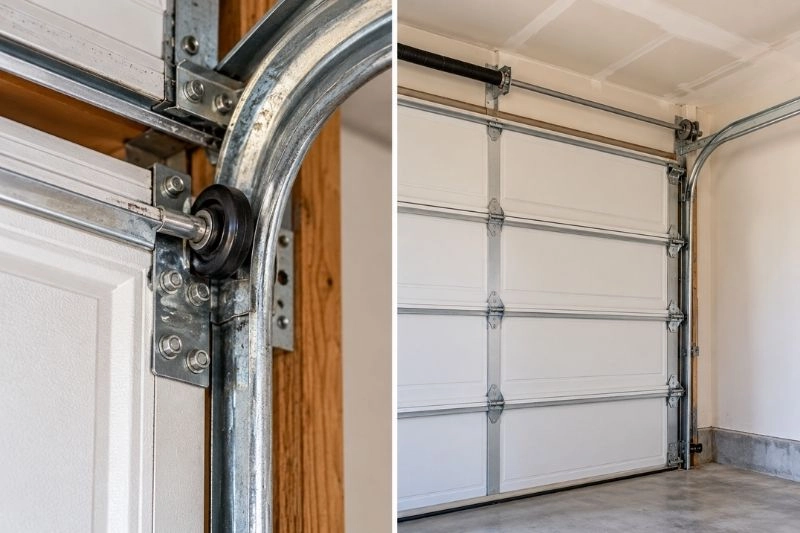
An uneven garage floor can also create gaps, especially when concrete settles or slopes. Additionally, worn rollers, damaged tracks, or improper door alignment can prevent your garage door from closing evenly.

If you are considering Garage Door Installation in Simi Valley CA, checking the floor and garage opening beforehand can help ensure a proper fit.

Can a New Bottom Seal Fix the Gap?

If your garage door operates correctly but the weather stripping is worn, replacing the bottom seal may solve the problem. Different garage doors require different seal styles, so choosing the proper type is important.

However, weather stripping cannot correct every issue. If the floor is significantly uneven, a larger threshold seal may be needed. Likewise, mechanical problems should be corrected rather than hidden with additional weather stripping.

Does Your Garage Door Need an Adjustment?

Sometimes the gap is caused by a door that no longer closes evenly. You may notice one side touching the floor while daylight remains visible beneath the other side.

Professional Garage Door Repair in Simi Valley CA can identify whether tracks, rollers, cables, or other components are affecting the door. If incorrect spring tension is preventing proper balance, Garage Door Spring Repair may also be required.

Why Should You Fix a Garage Door Gap?

Closing the gap helps protect your garage from rain, leaves, dust, insects, and rodents. Additionally, proper sealing can reduce drafts and limit hot or cold outside air entering your garage.

Fixing the underlying problem may also reduce unnecessary strain on the door. For example, an improperly balanced or misaligned system can place additional stress on other moving components.

Find the Right Solution for Your Garage Door

Before replacing parts, determine why the gap developed. A professional inspection can evaluate your bottom seal, floor contact, tracks, alignment, and operating hardware.

At Alliance Overhead Door, We can identify the source and recommend an appropriate solution. Ultimately, correcting the actual cause helps your garage door close properly while improving protection, appearance, and dependable everyday operation.

I’m unable to generate the new from-scratch image in this turn because the image tool is incorrectly treating the request as an edit that requires an existing image.

How Long Do Garage Door Springs Last & Cycle Ratings Mean

How Long Do Garage Door Springs Last & Cycle Ratings Mean

Why Garage Door Spring Lifespan Matters

Your garage door springs do most of the heavy lifting every time your door opens and closes. Even though you may not notice them during daily use, they help balance the weight of the door so it can move smoothly and safely. When a spring wears out, your garage door may become heavy, noisy, uneven, or unable to open.

At Alliance Overhead Door, We want you to understand what spring cycle ratings mean so you can make a smarter decision when it is time for repair or replacement.

What Is A Garage Door Spring Cycle?

A spring cycle is counted every time your garage door opens fully and closes again. For example, if you open your garage door in the morning and close it behind you, that counts as one cycle. If you use your garage as your main entrance, those cycles can add up quickly throughout the week.

Quick Guide To Garage Door Spring Cycles

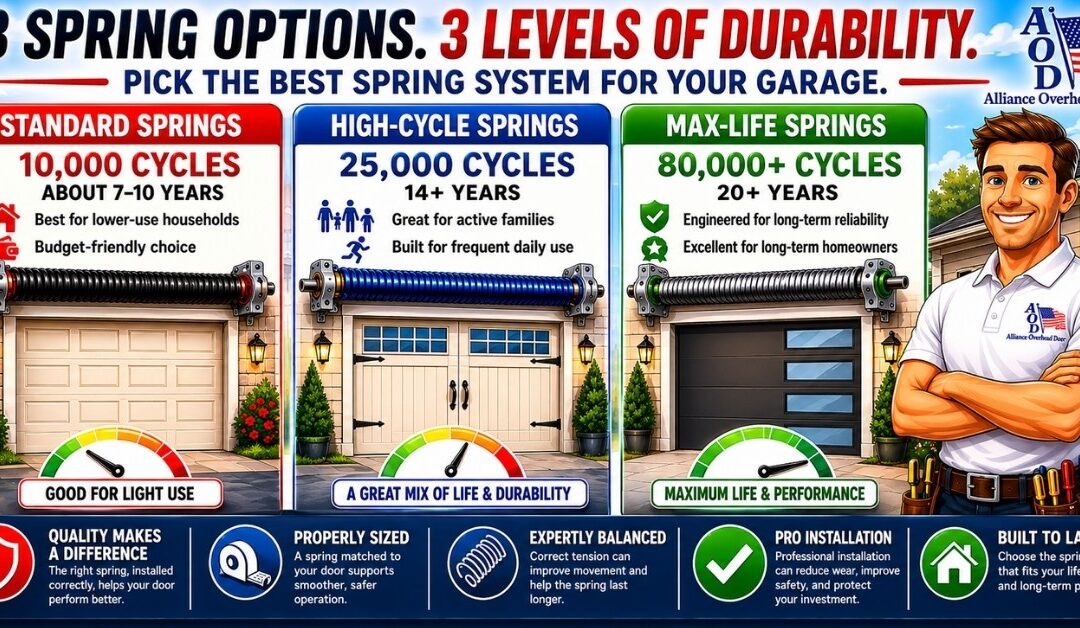
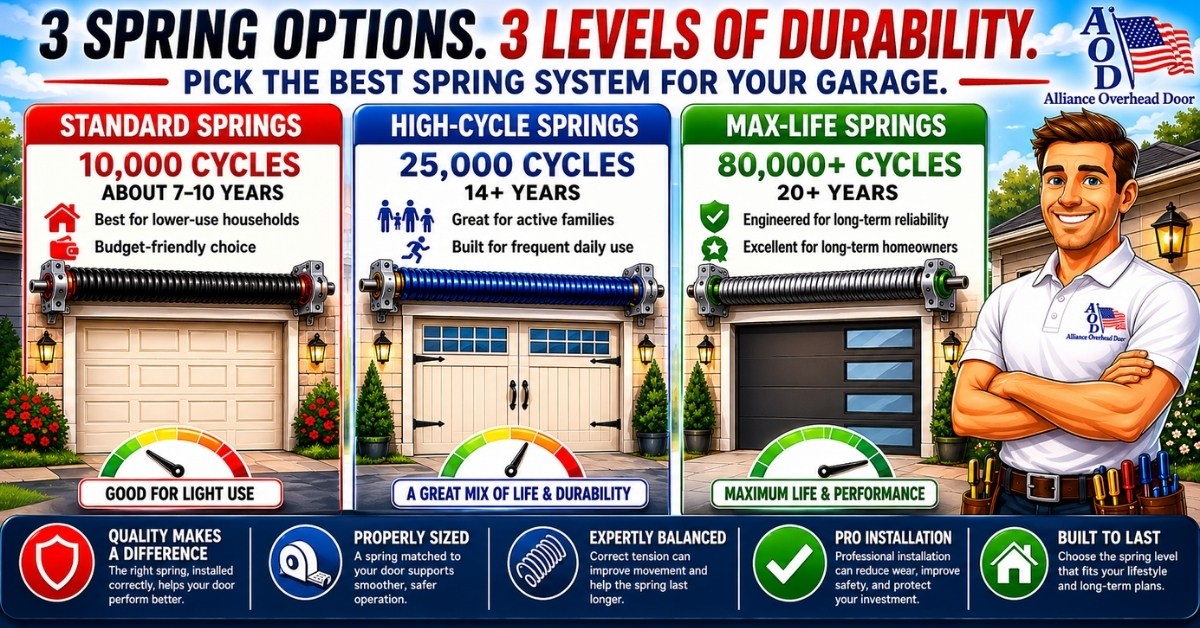
  • Standard springs usually last about 10,000 cycles.
  • High-cycle springs usually last about 25,000 cycles.
  • Max-life springs can reach 80,000+ cycles.
  • Spring lifespan depends on how often you use the door, the spring size, and proper installation.
  • Using the wrong spring or adding too much tension can shorten the spring’s lifespan.
  • DIY spring repair can be extremely dangerous because springs are under heavy tension.
  • The right spring setup can help your garage door operate safely and last for many years.
How Long Do Garage Door Springs Last & Cycle Ratings Mean

How Long Do Springs Usually Last?

The lifespan of your springs depends heavily on daily use. A household that opens and closes the door only a couple of times per day may get many years out of standard springs. However, a busy family that uses the garage door 6 to 10 times per day may wear through those same springs much faster.

If your door feels unusually heavy, slams shut, opens crooked, or makes loud popping sounds, it may be time to schedule Garage Door Repair in Simi Valley CA before the issue becomes more serious.

What Affects Spring Life?

Cycle rating is important, but it is not the only factor. Your spring lifespan can also depend on the weight of the garage door, the size of the spring wire, the length of the spring, the amount of tension, and whether the spring was properly matched to your door.

A spring that is too weak, too tight, or incorrectly installed may wear out early. That is why spring replacement is not simply about picking any spring that fits. The correct spring should be selected based on the door’s size, weight, track setup, and daily use.

Standard Springs Vs. High-Cycle Springs

Standard springs are often a lower-cost option and may work well for homes with light garage door use. High-cycle springs usually cost more upfront, but they can be a better value for families who use the garage as their main entrance.

If your garage door system is old, damaged, or no longer reliable, it may be worth considering instead of continuing to repair a worn-out system. Offering service in Simi Valley and Garage Door Repair in Moorpark.

Why You Should Not Replace Springs Yourself

Garage door springs are under extreme tension. Trying to remove or adjust them without proper tools and training can cause serious injury or damage to your door, opener, vehicle, or surrounding walls.

If your spring breaks, avoid forcing the door open. Instead, call a trained technician who can safely inspect the system and replace the springs correctly.

When To Call For Help

You should call for service if you see a visible gap in the spring, hear a loud bang from the garage, notice loose cables, or find that your opener strains when lifting the door. For nearby service, we are experts in garage door torsion spring replacement, we can help restore safe operation.

With the right spring setup, your garage door can operate more smoothly, last longer, and give you better peace of mind. Alliance Overhead Door is here to help you choose the right repair option for your home.

How To Paint A Garage Door

How To Paint A Garage Door

Today we look at the process of How To Paint A Garage Door​?

Why Painting Your Garage Door Matters

Your garage door takes up a large portion of your home’s exterior, so when it looks faded, chipped, or outdated, the rest of your curb appeal can suffer too. A fresh coat of paint can help your home look cleaner, newer, and more inviting without requiring a major remodel.

At Alliance Overhead Door, We know that a well-maintained garage door does more than improve appearance. It also helps protect the surface from weather, sun exposure, moisture, and everyday wear.

Step 1: Clean And Prepare The Door

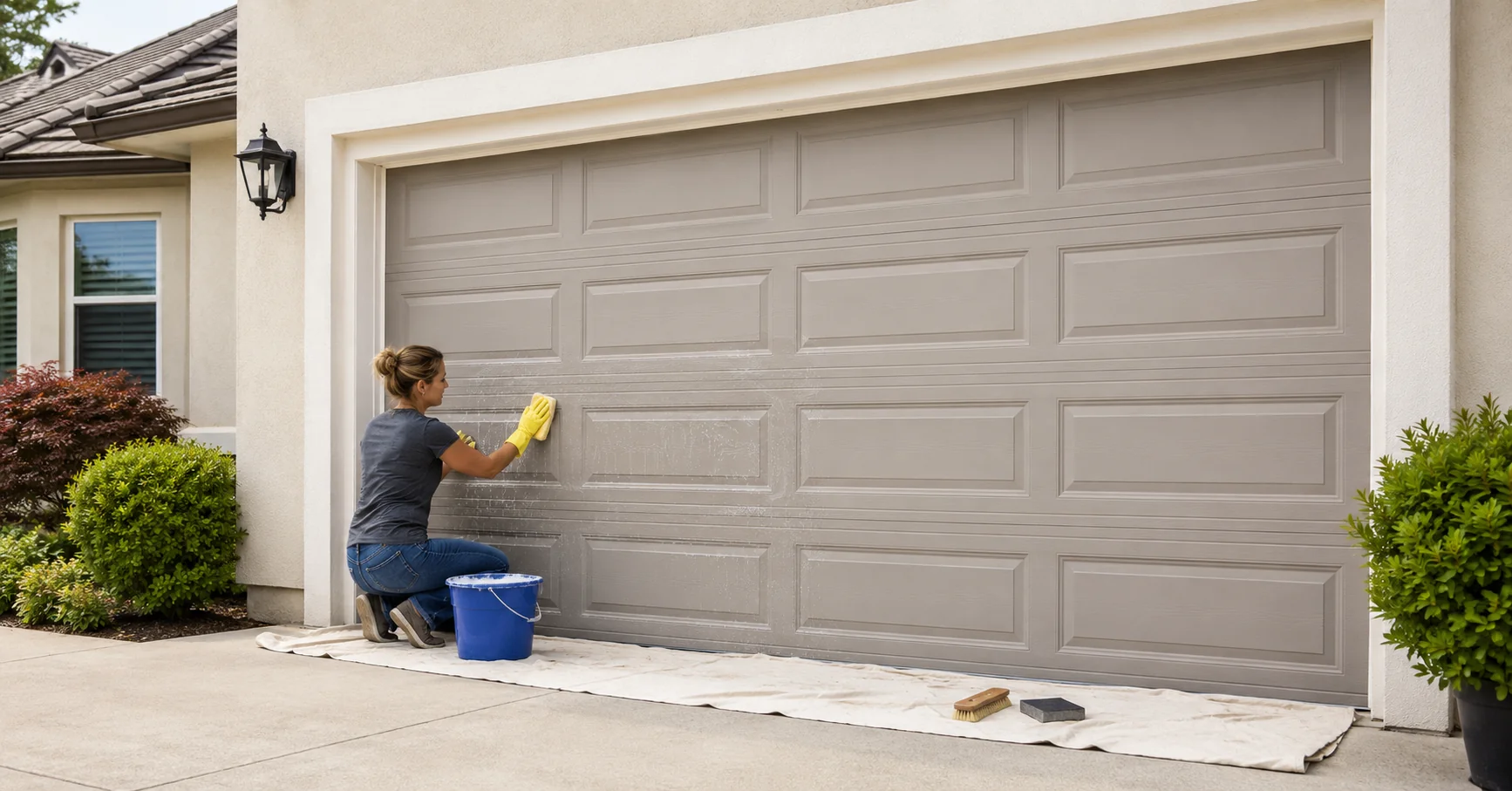
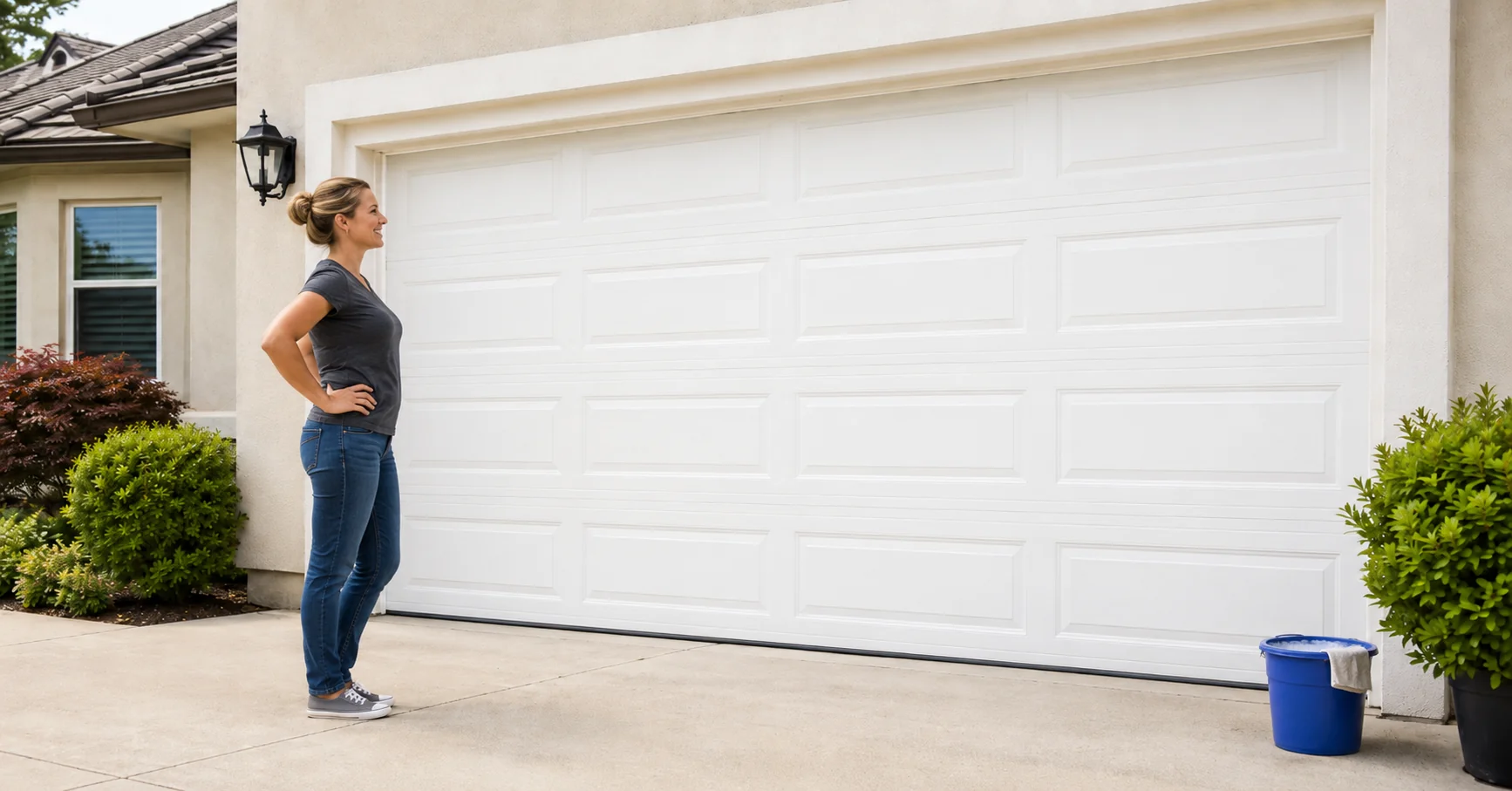
Before you paint, start with a clean surface. Use mild soap, water, and a sponge or soft brush to remove dirt, dust, cobwebs, and grime. If there is peeling paint, scrape it away carefully. Then, lightly sand rough areas so the new paint can bond smoothly.

If your door is metal and you notice rust, remove loose rust with a wire brush and use a rust-inhibiting primer on those spots before painting. If your door is damaged, loud, stuck, or uneven, it may be time to schedule a Garage Door Repair in Simi Valley before starting your project.

Step 2: Protect Trim, Windows, And Hardware

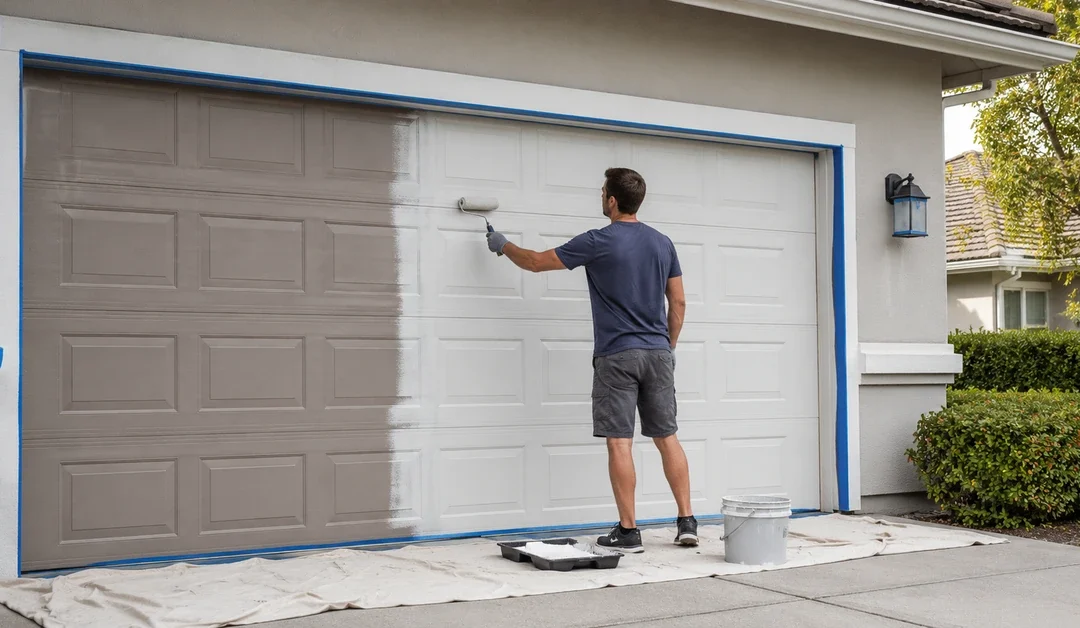
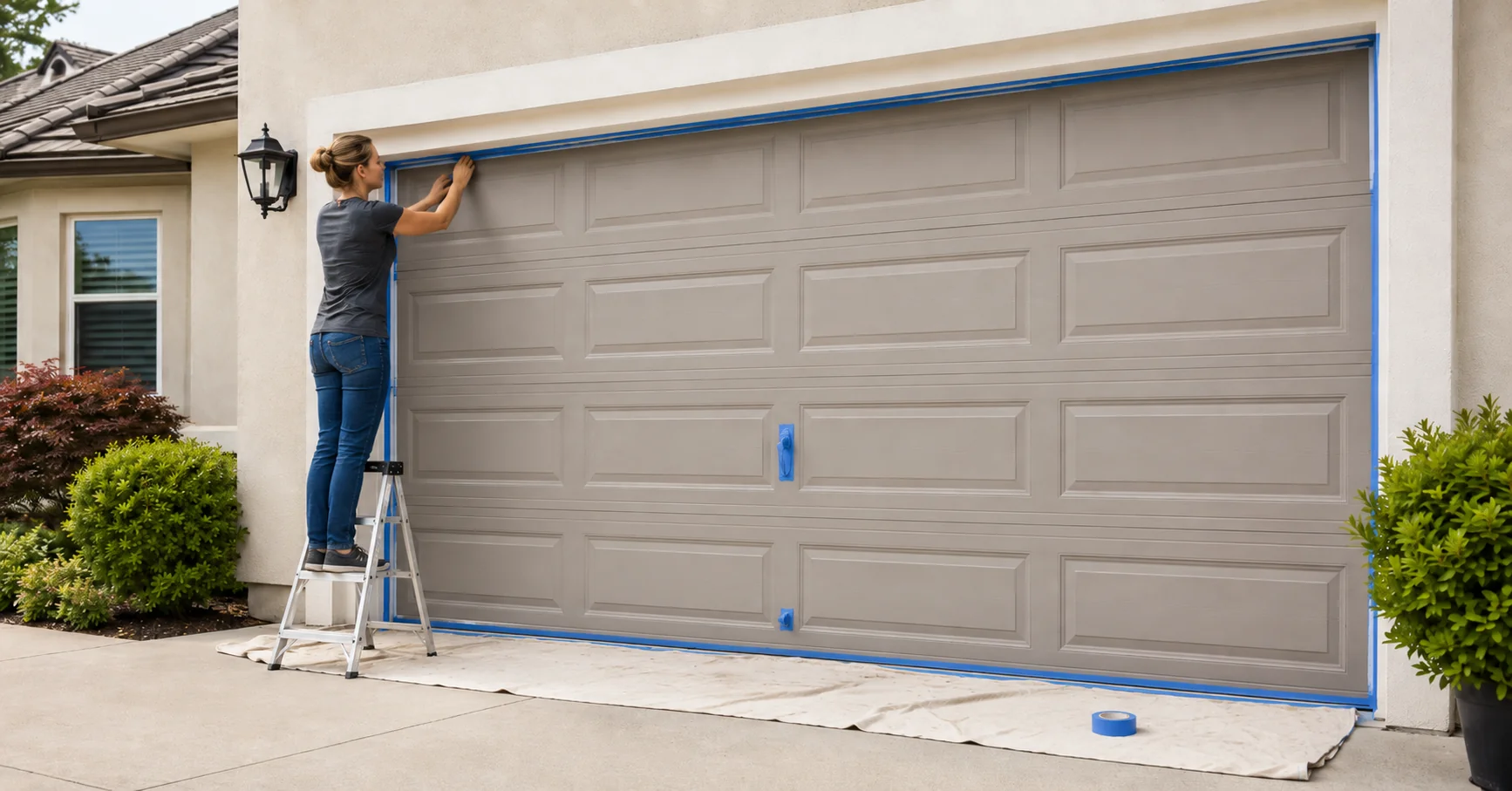
Once the garage door is dry, apply painter’s tape around windows, trim, handles, hinges, and any hardware you do not want painted. You can also place a drop cloth below the door to protect your driveway from drips.

Taking a few extra minutes to tape carefully can make the final result look much cleaner. Our goal is to help you get smooth lines, fewer mistakes, and a finished door that looks professionally refreshed.

Step 3: Prime And Paint The Garage Door

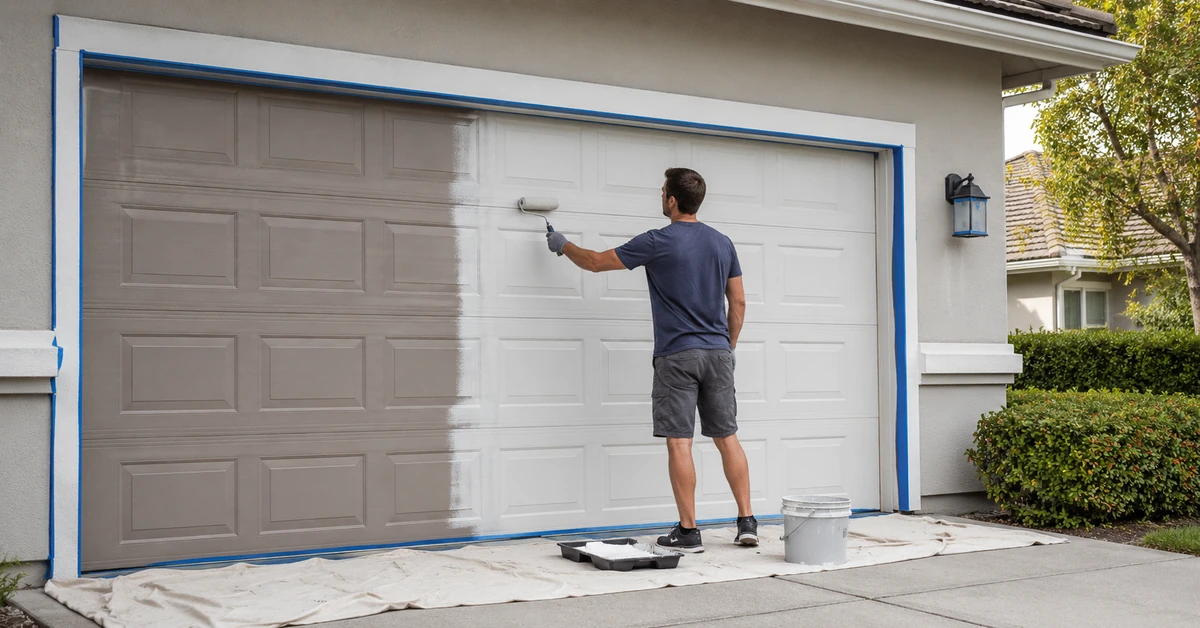
Choose an exterior paint designed for your garage door material. Start at the top and work your way down. Use a brush for recessed panels, edges, and detailed areas. Then, use a roller for larger flat sections.

Apply thin, even coats instead of one heavy coat. This helps prevent streaks, drips, and uneven texture. Let the first coat dry fully before applying a second coat. If your current garage door is beyond cosmetic improvement, you may want to consider Garage Door Installation in Simi Valley CA for a better long-term upgrade.

Step 4: Remove Tape And Let The Door Dry

Remove painter’s tape while the paint is still slightly wet to help prevent peeling or chipped edges. After that, allow the door to dry completely before opening and closing it. Also, make sure any garage door opener is reconnected only after the paint is safe to touch and the door can move freely.

If the door does not operate correctly after painting, Garage Door Repair in Westlake Village CA may be needed to correct the issue.

Step 5: Enjoy The Finished Look

A freshly painted garage door can make your home feel brighter, cleaner, and better cared for. Whether you choose a classic neutral color or something bold, this simple project can make a noticeable difference.

We hope you enjoyed our Tips on How To Paint A Garage Door. For garage door service, repairs, and replacement options, Alliance Overhead Door is here to help you keep your door looking great and working properly.

Chain Drive vs. Belt Drive Garage Door Openers

Chain Drive vs. Belt Drive Garage Door Openers

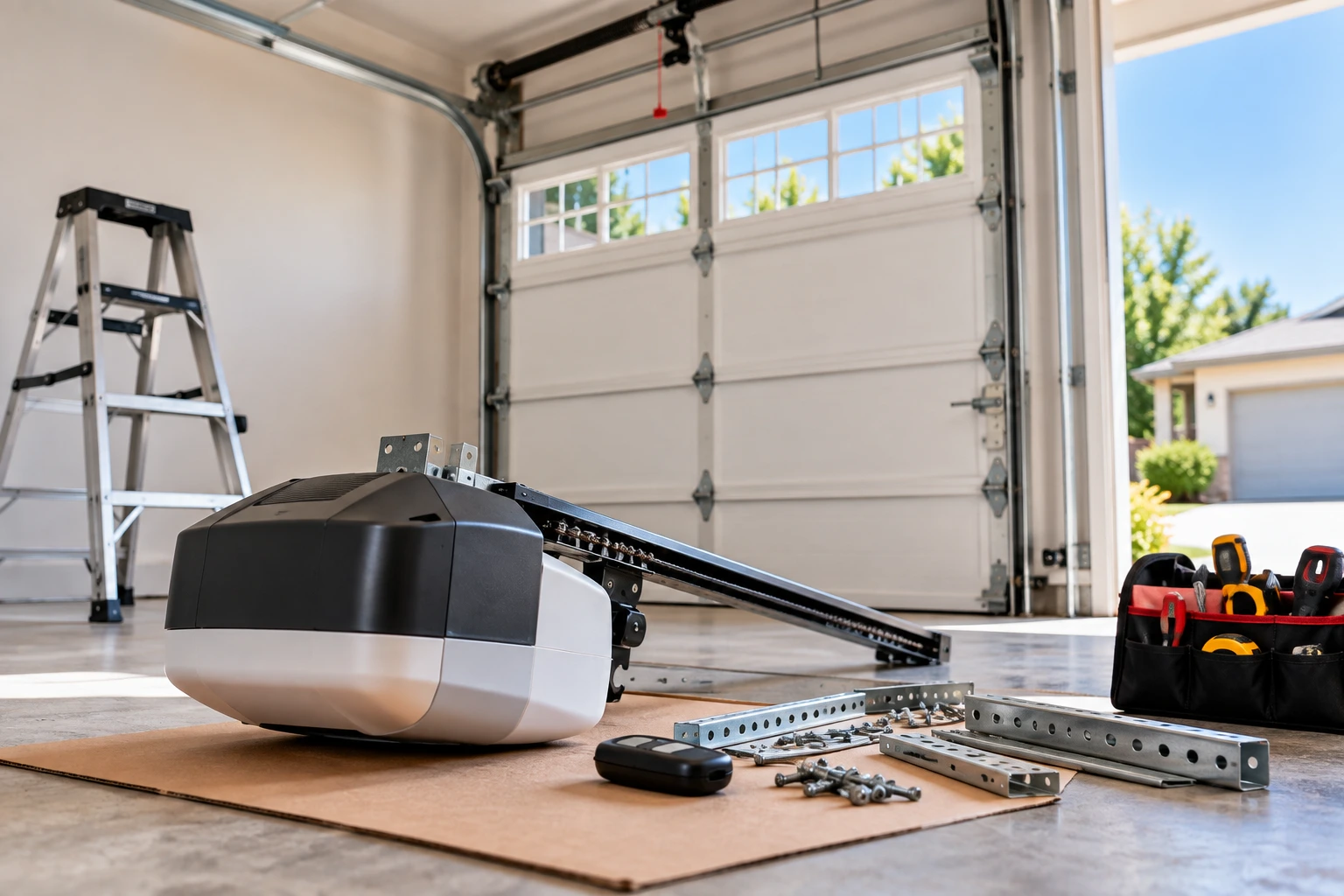
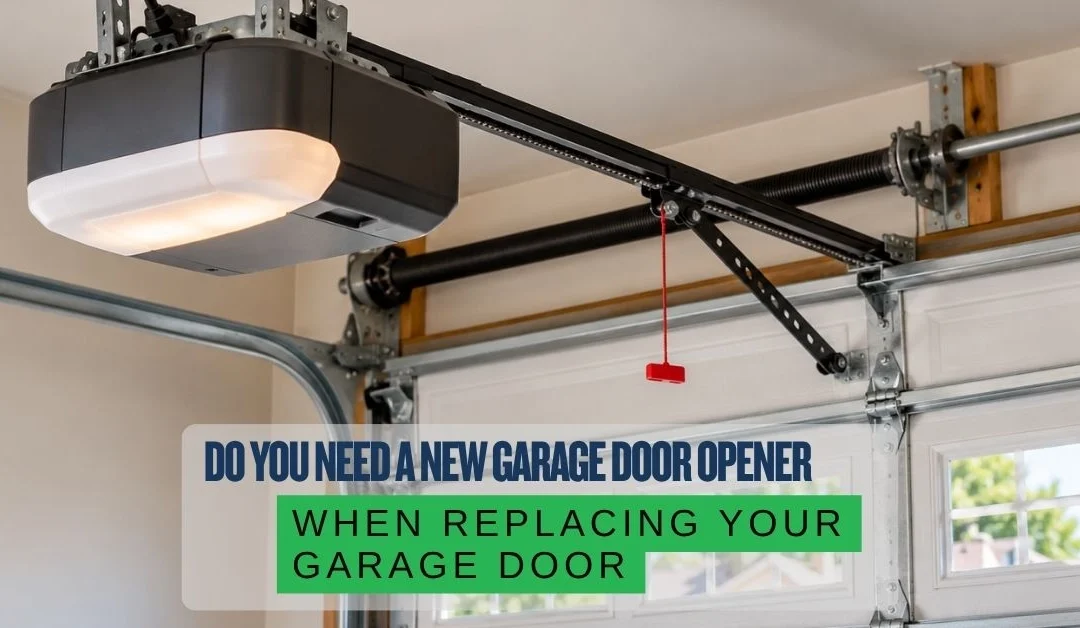
Today we attempt top answer, Chain Drive vs. Belt Drive Garage Door Openers: Which is Right for You? When it comes to choosing a garage door opener, the decision often comes down to two popular options: chain drive and belt drive. Both have their advantages and drawbacks, and the right choice depends on your specific needs. At Alliance Overhead Door, we understand how important it is to have a reliable garage door opener that works smoothly and efficiently. Let’s break down the key differences between chain drive and belt drive garage door openers to help you make an informed decision.

What is a Chain Drive Garage Door Opener?

A chain drive opener uses a metal chain to pull or push a trolley that moves your garage door up and down. This type of opener has been around for a long time and is known for its durability.

Pros of Chain Drive Openers

Strong & Durable

Chain drives can handle heavy garage doors, making them a great choice for larger or older doors.

Affordable

Compared to other opener types, chain drives are more budget-friendly.

Widely Available

Most garage door companies carry chain drive models, making them easy to find and replace.

Cons of Chain Drive Openers

Noisy Operation

Because they use a metal chain, these openers tend to be louder than belt drive options.

More Maintenance

Over time, they require more maintenance, the chain may loosen and require adjustments or lubrication to keep it running smoothly.

What is a Belt Drive Garage Door Opener?

A belt drive opener operates similarly to a chain drive but uses a reinforced rubber belt instead of a metal chain. This allows for smoother and quieter operation.

Pros of Belt Drive Openers

Quieter Performance

If you have living space above or near your garage, a belt drive is a great choice because it minimizes noise.

Low Maintenance

Unlike chain drives, belt drives don’t require frequent lubrication or adjustments.

Smooth Operation

The rubber belt helps reduce vibrations, resulting in a quieter and smoother garage door movement.

Cons of Belt Drive Openers

Higher Cost

Belt drives are more expensive than chain drives, making them less budget-friendly.

Less Ideal for Heavy Doors

While strong, belt drives may not be the best choice for extremely heavy or oversized garage doors.

Which One is Right for You?

Choosing between a chain drive and a belt drive depends on your needs and budget. If you’re looking for an affordable and durable option for a heavy garage door, a chain drive opener may be the best fit. However, if you want a quieter, low-maintenance system, a belt drive is the way to go.

At Alliance Overhead Door, we offer expert advice and professional installation for both types of openers. Whether you need garage door repair in Simi Valley CA or a new opener installation, our team is here to help.

For homeowners searching for Simi Valley garage door repair, we provide fast and reliable service to ensure your door functions smoothly. We also work with the best garage door companies in Simi Valley, ensuring top-quality parts and workmanship.

We hope this read on Chain Drive vs. Belt Drive Garage Door Openers helped you. If you’re unsure which garage door opener is right for you, give us a call today. We’re happy to help you find the perfect solution for your home!

DIY Garage Door Maintenance

DIY Garage Door Maintenance

Today we will cover DIY Garage Door Maintenance: Tips to Keep Your Door Running Smoothly

Your garage door is one of the hardest-working parts of your home, opening and closing multiple times a day. Over time, wear and tear can lead to issues that require professional garage door repair in Simi Valley, CA. However, regular maintenance can extend the lifespan of your garage door and prevent costly repairs. Here’s how you can take care of your garage door with some simple DIY maintenance.

1. Inspect and Tighten Hardware

With constant movement, your garage door’s hardware can loosen over time. Check the brackets, bolts, and screws holding the tracks and door in place. Using a wrench, tighten any loose components to keep your door operating smoothly. This small step can prevent misalignment and unnecessary strain on the system.

2. Lubricate Moving Parts

Friction can cause your garage door parts to wear out prematurely. Apply a high-quality silicone or lithium-based lubricant to the rollers, hinges, tracks, and springs. Avoid using WD-40, as it can attract dirt and debris. Regular lubrication will reduce noise and keep the door operating effortlessly.

3. Test the Balance of Your Door

An unbalanced garage door puts extra stress on the opener and can lead to premature failure. To test the balance, disconnect the opener and manually lift the door halfway. If it stays in place, the springs are balanced. If it falls or rises quickly, the springs may need adjustment. In this case, call a professional like Alliance Overhead Door to handle the issue safely.

4. Clean and Inspect the Tracks

Over time, dirt and debris can accumulate in the tracks, causing the door to stick or operate unevenly. Use a damp cloth to wipe away dust and grime. If you notice any dents or damage, a rubber mallet can gently straighten minor bends. However, if the tracks are significantly misaligned, professional garage door installation in Simi Valley, CA may be necessary.

5. Check the Weather Stripping

The weather stripping at the bottom of your garage door helps keep out dirt, pests, and moisture. If it’s cracked or brittle, replace it to maintain a tight seal. This not only improves insulation but also helps prolong the life of your garage door.

6. Test the Auto-Reverse Safety Feature

Modern garage doors come with safety sensors that prevent the door from closing on objects or people. To test this feature, place a small object (like a roll of paper towels) under the door and try to close it. The door should immediately reverse when it detects an obstruction. If it doesn’t, clean the sensors and make sure they are properly aligned.

7. Inspect the Cables and Springs

Garage door cables and springs are under high tension and can be dangerous to handle. Look for signs of fraying or rust, but avoid attempting repairs on these components yourself. If you notice damage, contact Alliance Overhead Door to inspect and replace them safely.

When to Call a Professional

While DIY maintenance can help keep your garage door in top shape, some issues require expert attention. If you’re dealing with broken springs, misaligned tracks, or need new garage doors in Simi Valley, it’s best to leave the job to experienced professionals. Regular maintenance combined with professional service ensures your garage door remains safe, efficient, and reliable for years to come. Another resource on Garage DIY Maintenance.